Texte
Welcome to EBVS, European Board of Veterinary Specialisation

 Committed to ensure the highest quality of veterinary medicine in Europe by specialisation
for better quality of life of animals and people.

Text
Video file

Veterinary Specialist Colleges

Block

Colleges

European College of Aquatic Animal Health

European College of Aquatic Animal Health (ECAAH) Objectives: Advance the field of aquatic animal health, specifically focusing on animals that are cultured/maintained in captivity or in the wild, excluding marine or freshwater mammals, birds, and reptiles. Establish guidelines for post-graduate education, ensuring the elevation of skills of those practicing in aquatic animal health. Oversee the examination and certification of veterinarians as  EBVS® European Veterinary Specialists® in Aquatic Animal Health. Enhance methods of graduate teaching, particularly through residency programs in aquatic animal health. Promote research, advancements, and continuous learning in aquatic animal health. Foster communication and the dissemination of knowledge related to aquatic animal health to both veterinary professionals and the wider public.

European College of Zoological Medicine

European College of Zoological Medicine (ECZM) Objectives: To promote research and elevate the proficiency of veterinarians in zoological medicine in Europe. To establish guidelines for post-graduate education, guiding the pathway to becoming a EBVS® European Veterinary Specialist in Zoological Medicine. To administer examinations and certify veterinarians as  EBVS® European Veterinary Specialists in Zoological Medicine. To advocate for communication and the distribution of knowledge about zoological medicine, emphasizing the essential role of ECZM members in matters related to health, welfare, and biosecurity in zoological care, management, and medicine.

European College of Veterinary Pathologists

The primary objectives of the European College of Veterinary Pathologists (ECVP) are: To advance veterinary pathology in Europe, supporting research and elevating veterinarians' expertise in this domain. To provide clear guidelines for specialization in veterinary pathology. To conduct thorough examinations, certifying veterinarians as  EBVS® European Veterinary Specialists in Pathology. To organize continuous educational courses, ensuring professionals stay updated in the field. To foster research and ensure wide dissemination of knowledge in veterinary pathology to both peers and the broader community.

European College of Poultry Veterinary Science

The primary objectives of the European College of Poultry Veterinary Science (ECPVS) are: To enhance poultry veterinary science throughout Europe by endorsing research and heightening the skills of veterinarians in this domain. To set forth guidelines and requisite standards for postgraduate education, creating a clear pathway for veterinarians to achieve the title of  EBVS® European Veterinary Specialist in Poultry Veterinary Science. To administer examinations and certify veterinarians as European Veterinary Specialists in Poultry Veterinary Science, ensuring they prioritize the health and welfare of poultry, contribute to producing safe, high-quality products for consumers, and support the sector's economic vitality, all within the framework of sustainable agriculture. To stimulate communication, continuous learning, and the dissemination of knowledge in poultry veterinary science amongst both professionals and the broader community.

European College of Bovine Health Management

ECBHM strives to advance health-oriented bovine production management in the herd context in Europe and increase the competency of those who practice in this field by: Formulating guidelines and standards for postgraduate education and experience, setting prerequisites for becoming a EBVS® European Veterinary Specialist in Bovine Health Management. Certification: Authenticate and certify veterinarians as specialists in bovine herd health management. This ensures that cattle receive expert care and serves the interests of the cattle's owner, product consumers, and the broader public. Research & Knowledge Expansion: Champion research and other contributions in the domain of bovine herd health management. This encompasses: Animal husbandry Internal medicine, surgery, and obstetrics Reproductive management Topics related to the epidemiology, pathogenesis, diagnosis, treatment, prevention, and control of diseases impacting bovidae Fostering healthy and productive cattle herds Understanding the implications of bovine diseases and related pathogens on the quality and safety of bovine products Emphasizing herd health, production goals, cattle population management, and production systems. Communication: Facilitate the sharing and distribution of knowledge and insights within this specialty.

European College of Animal Reproduction

The primary goals of the European College of Animal Reproduction (ECAR) are: To elevate expertise in animal reproduction in Europe, encompassing reproductive medicine, surgery, and biotechnology. To establish, train, and certify EBVS® European Veterinary Specialists in animal reproduction. To devise comprehensive post-graduate education guidelines essential for specialization in animal reproduction. To conduct examinations and qualify veterinarians as specialists to benefit the veterinary patient, owners, and the wider public. To promote research, knowledge expansion, and its dissemination in the field of animal reproduction.

European College of Veterinary Microbiology

The primary objectives of the European College of Veterinary Microbiology (ECVM) are: To champion the advancement of veterinary microbiology across all European nations. This involves fostering in-depth research, pushing boundaries of knowledge, and ensuring the continual improvement of veterinary medical services for the benefit of the public. To formulate and implement precise guidelines for post-graduate education, providing a structured pathway for veterinarians aspiring to specialize in veterinary microbiology. To conduct rigorous examinations and subsequently certify veterinarians as  EBVS® European Veterinary Specialists in veterinary microbiology. This recognition not only assures the competency of the professionals but also ensures the provision of expert care to animals affected by microbiological diseases. To facilitate an environment where continuous learning is encouraged. This includes promoting advances in veterinary microbiology, organizing continuing educational courses, and emphasizing the significance of research. Equally crucial is the dissemination of this expansive knowledge among veterinary peers and the wider community.

European College of Veterinary Diagnostic Imaging

The primary objectives of the European College of Veterinary Diagnostic Imaging (ECVDI) are: To spearhead advancements in veterinary diagnostic imaging, emphasizing research, innovation, and refining methodologies, thus enhancing the proficiency of veterinarians in this specialization. To lay down robust guidelines for specialization, facilitating veterinarians on their journey to achieve the esteemed title of  EBVS® European Veterinary Specialists in Veterinary Diagnostic Imaging. To meticulously conduct examinations and subsequently qualify veterinarians as  EBVS® European Veterinary Specialists in Veterinary Diagnostic Imaging, endorsing their unparalleled expertise in the field. To stimulate an environment of continual learning, fostering communication and the free flow of knowledge about diagnostic imaging among veterinary professionals, ultimately benefiting both the public and the broader animal healthcare community by safeguarding them from unqualified practitioners.

European College of Veterinary Ophthalmologists

The primary objectives of the European College of Veterinary Ophthalmology (ECVO) are: To advance veterinary ophthalmology in Europe through focused research and by elevating the competency of veterinarians in this specialty, emphasizing comprehensive understanding and management of animal eye diseases. To set clear guidelines for specialization in veterinary ophthalmology, establishing a benchmark for excellence. To execute a rigorous examination process, certifying veterinarians as  EBVS® European Veterinary Specialists in Ophthalmology, ensuring the highest standard of care for animals with eye conditions. To champion continuous learning in veterinary ophthalmology by organizing relevant educational courses, keeping veterinarians abreast with the field's latest advancements. To prioritize knowledge-sharing in veterinary ophthalmology, fostering research and promoting insights beneficial to the veterinary community and the public.

European College of Veterinary Surgeons

European College of Veterinary Surgeons (ECVS) Objectives: To foster research and elevate the competency of veterinarians in veterinary surgery for both small and large animals across Europe. To establish guidelines for post-graduate education, paving the way to become a  EBVS® European Veterinary Specialist in Veterinary Surgery. To conduct examinations and certify veterinarians as  EBVS® European Veterinary Specialists in Veterinary Surgery. To promote communication and the dissemination of knowledge regarding veterinary surgery among veterinary professionals and the wider public.
Text

Countries

Image
EBVS organisation map

EBVS® is a European organisation focussed on veterinary specialisation in the Member States of the European Union and its neighbours, particularly Switzerland and Norway. EBVS specialists are also found in other countries.

Text

 EBVS Congress 2026
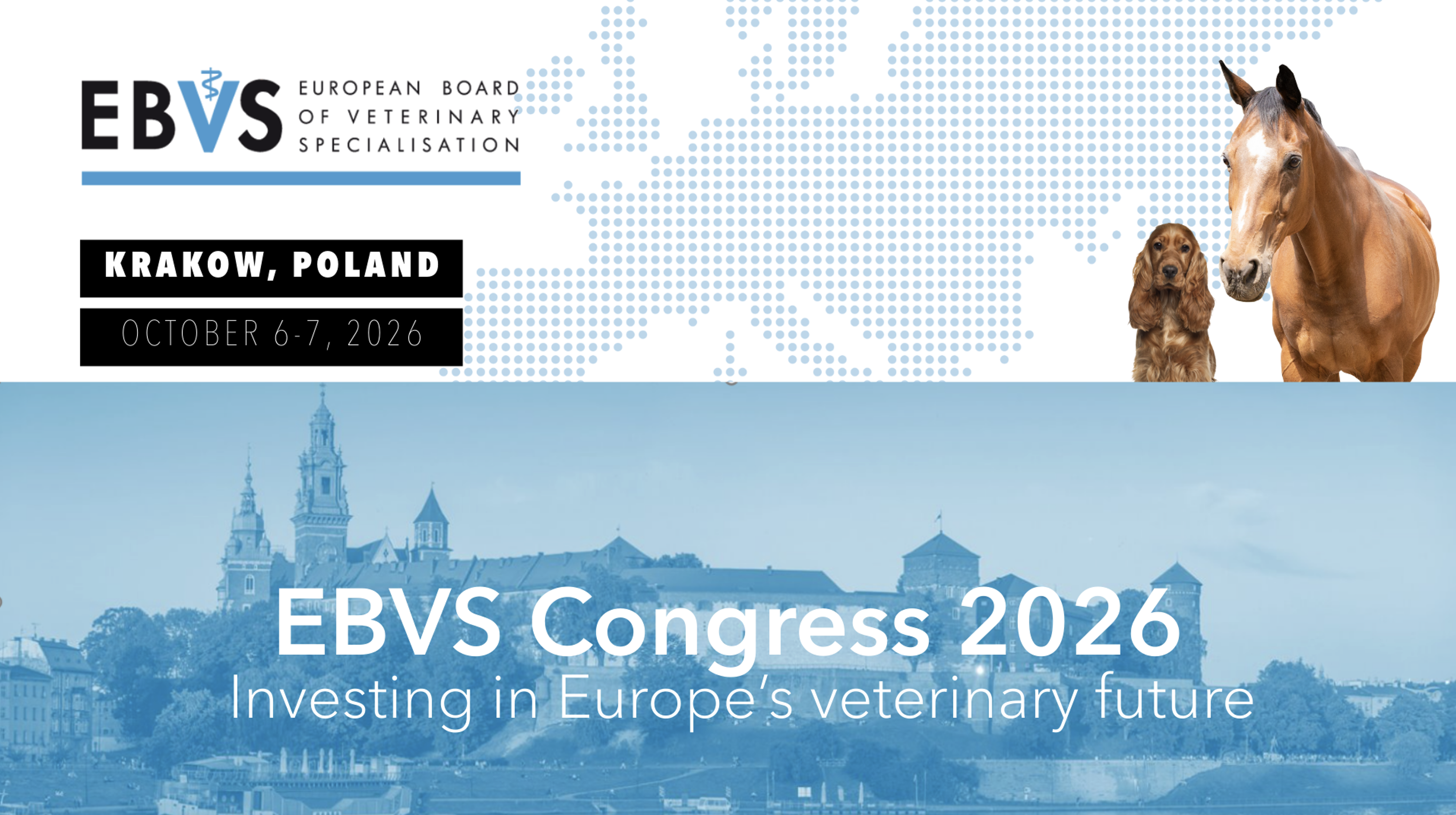
EBVS Congress 2026

Block

Events

Block

Vacancies

Texte

Helpdesk

Texte

 EBVS Congress 2026